
The Consumerization of Care
Tuesday: 7:47 AM
Maya is making coffee. She adjusts her headband. But this is no mere hair accessory. Its transcranial electrical stimulation put an end to her premenstrual dysphoric disorder (PMDD) long ago. Stirring the cup, she barely remembers the debilitating pain, depressive mood swings. Her phone lights up. DoorDash is on its way: salmon, leafy greens, dark chocolate. Her health agent ordered these foods when it detected she’d entered her luteal phase. Tonight’s weights class has been swapped for yoga. Her calendar has been adjusted. Maya didn’t need to lift a finger, only her cup.
Facts of life
The previous scene is not speculative fiction set in 2035. This is the here and now. The headband is Samphire Neuro’s Nettle, a CE-marked, drug-free, hormone-free, brain-based neurostimulation device revolutionizing women’s health. The health agent is miora, an AI-powered assistant that connects to your wearables, auto-books workouts on ClassPass and runs your health life through chat-powered interface.
Healthcare is rapidly becoming a consumer brand, not a system people navigate. Patients are beginning to behave accordingly. They expect quality, speed, choice and seamless connected care delivery. If the experience falls short, they walk away. The organizations paying attention are already responding. Capgemini research found that between 2021 and 2024, connected health portfolios grew across the board: monitoring and follow-up was the fastest growing focus (+127%), followed by diagnosis (+83%), direct treatment (+25%) and preventive care and wellness (+22%). Clinical outcomes will always matter. But the new benchmark is deeply consumerized.
An emerging diagnosis: The changing landscape
Refined roles and value chain in the healthcare ecosystem
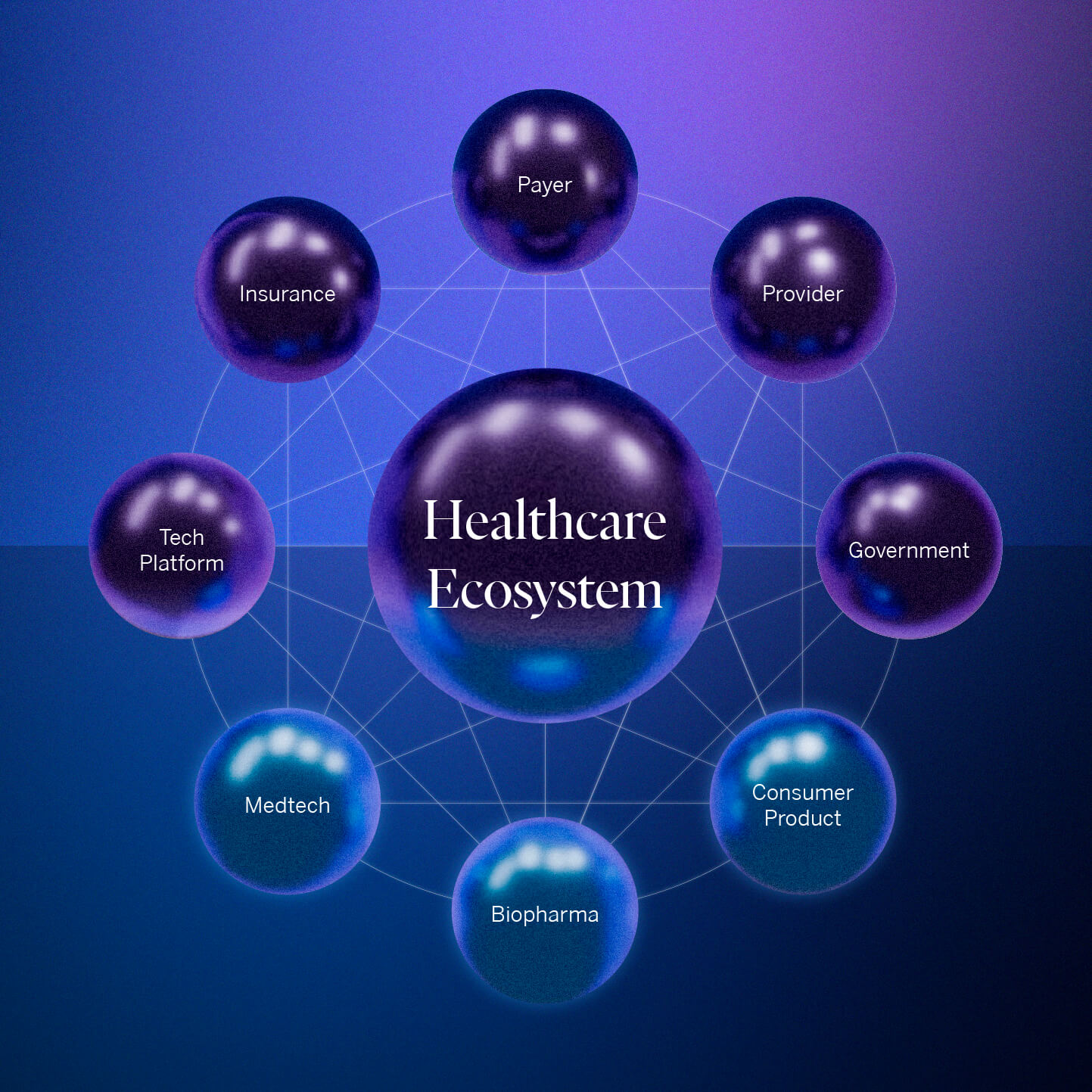
The line between consumer and clinical is blurring
Google’s health-tracking wearable, Fitbit, launched in 2009 with a simple ambition: Get people moving. It worked, and then it quickly became a footnote in the evolution of HealthTech. But Google is not the only laggard. If you’re still using Apple Health to track your steps, you’re a few steps behind. The Whoop wristband reads motion and heart rate to distinguish between over 60 activities, whether it’s paddling, rock climbing, or open-water swimming. Moreover, tells you exactly how hard you should push your body the next day.
Oura is another example of pioneering tech. Across 5.5 million users, the life-saving stories just keep coming. Whether it’s Hodgkin lymphoma caught early, or a life-threatening heart condition flagged in time for emergency surgery. Last year, Oura hired its first-ever Chief Medical Officer, Ricky Bloomfield, with an explicit mandate to build a clinical team. More recently, Oura CEO, Tom Hale called for regulatory reform, warning that innovative manufacturers face an impossible choice: Tailor features to the wellness category and sacrifice functionality, or accept slower product development and market entry. The FDA updated its guidance weeks later, beginning to recognize population-level consumer data as clinical evidence, at a scale no conventional trial can match. Oura has already been reimbursed across multiple lines of business. With a clinical vision now steering the company, it will only expand further.
None of these companies started out with medical devices, but they are all now building clinical moats. The FDA is already listening. Institutional payers are the next enabler, and when the product gets reimbursed, the addressable population will grow not incrementally but exponentially.
The testing revolution is underway
Today, we either rely on annual check-ups (limited in scope, time-consuming, context-poor) or wait until something goes wrong. Beyond those moments, we’ve had almost no visibility into what’s actually happening inside our bodies. We fly blind year after year and call it healthcare. That model is being dismantled.
Companies like Function Health and Superpower are building comprehensive, integrated, personalized and increasingly accessible testing ecosystems. Function Health offers over 160 lab tests annually. It charges $365 per year for a panel that would cost over $15,000 through traditional channels. That’s one dollar per day for a better look at your biology than most people get in a lifetime of GP appointments. In 2025, they launched their Medical Intelligence Lab, which is designed to unify labs, imaging, wearables and medical records data into a continuous learning model of your health. More recently, they released a ChatGPT plug-in that lets members conversationally interrogate their own lab results. Superpower launched in stealth mode in 2023, charging clients $499 per year, with over 100 biomarkers and 150,000 people on the waitlist. They’ve since slashed their opening fee to $199. Today, they are building a personalization layer that tailors testing profiles to age, health risks, and personal goals.
With such innovation and improving economics, we may be closer than we think to a world in which you walk into your local Walmart to get a full body scan for a fraction of the current price. It sounds like science fiction, but the trajectory is clear.
Prevention finally has its moment
For years, prevention was seen as a wellness play: IV drips, infrared saunas, adaptogens with elegant packaging and aspirational price tags. That is changing. Prevention is being reframed not as a lifestyle choice but as a clinical and commercial imperative with a real business case.
The 80/20 rule is well established. It highlights how the top 20% of patients generate roughly 80% of healthcare costs, largely driven by late-stage chronic conditions. But what if the 20% could be identified and helped earlier? What happens to the traditional healthcare model when we stop treating sickness and start prioritizing a healthy lifestyle?
Healthy.io’s approach is simple: The most powerful clinical device you already own is your smartphone camera. The company’s flagship product, Minuteful Kidney, enables patients to test for chronic kidney disease (CKD) at home. The traditional urine dipstick is teamed with a phone camera and computer vision to read the results with lab-level accuracy. Results go directly to the clinician. Around 80% of high-risk patients who qualify for annual CKD testing never complete it. Minuteful Kidney pushed adherence to 50% in previously untested populations. They calculate their service could eliminate 19.8 million hours of dialysis among the 1.4 million people with diabetes in the UK who currently go untested, making a saving of nearly £700 million.
When the cost of prevention drops below the cost of a single late-stage intervention, the business model writes itself.
Healthcare is being reshaped from the outside in by patients who now trust platforms, peers and data as much as any clinical gatekeeper.








Point-in-time interventions are losing to deeply personalized ecosystems. Moreover, the treat-and-discharge model is becoming structurally inadequate for chronic conditions. What patients need is a persistent, “living” layer: continuous, personalized and integrated into daily life. The companies getting this right aren’t building better products; they’re building infrastructure that underlies a patient’s life and compounds over time.
“The future of care isn’t just a better product or a treatment; it’s the service layer or the infrastructure that wraps around the patient’s life, connects the dots and compounds over time.”
Chiara Diana VP, Chief Design Officer, frog, part of Capgemini Invent
GLP-1s were the fastest drug launch in history. Primarily pitched as weight management treatment, we’re beginning to see their effects on patients. Research suggest that 50-75% stop using GPL-1s within a year, often undernourished, metabolically unprepared and without a plan. GLP-1s didn’t solve obesity, but they did open a window. The same logic applies across chronic conditions. Every treatment needs a wrapper: during administration to ease intervention while supporting adherence, nutrition, emotional and lifestyle changes; and after the course, to integrate back into daily life, sustain outcomes and prevent regression. That persistent, living layer is where the real opportunity lives. Here, Alnu Health is a shining example of what can be achieved by building a Health OS.
The traditional playbook was largely driven by healthcare professionals (HCPs): clinical reps, hospital adoption, medical journals and Google search. That assumption is breaking down on three fronts simultaneously.
The gatekeepers to the internet are changing. Conversational AI is replacing Google as the front door to health decisions, in many cases bypassing the clinical rep entirely. Gartner predicted a 25% drop in Google search volume by 2026. It was proven correct within healthcare, where the shift has already occurred. People are so deeply invested in their health, with LLMs now meeting that obsession perfectly. Capgemini research indicates that 51% of the baby boomer generation and 50% of Gen X now use AI for medical advice, which has in turn led to a 44% decrease in engagement with traditional healthcare services. A patient can spend eight hours interrogating their results with an AI companion, while clinician spend only ten minutes examining the data.
These tools are always on, deeply contextual and building trust fast. They are not just discovery platforms; they are becoming the point of purchase. The implication is clear: Search Engine Optimization (SEO) is no longer enough. Generative Engine Optimization (GEO) is the new frontier, urging organizations to stay relevant inside the conversations happening in Claude, ChatGPT, Perplexity and other models.
“The front door to healthcare is no longer a clinic; it’s a chatbot, or a Reddit thread, or a TikTok at midnight.”
Laura Valiukeviciute, Strategy Lead, frog, part of Capgemini Invent
In addition to changing requirements for relevance, influence has become decentralized. Trust has migrated from institutions to lived experience. Reddit threads, TikTok and Instagram testimonials now shape purchase intent, treatment decisions and brand perception in ways clinical endorsement alone cannot. Younger generations never adopted the old channels to begin with. Superpower built its 150,000-person waitlist almost entirely through creator-led social, not paid search or HCP referral. That’s a distribution playbook borrowed from consumer brands. When applied to healthcare, it works.
Location is also once again becoming a strategic variable. As consumers gain more choice and are less bound by navigating the system, convenience becomes a key consideration. Where you exist in the real world matters as much as where you rank online. The winning formula is one that combines the digital and physical. You need the right online presence pulling people in, coupled with a physical location strategy: Own the right spaces, insertion points, and partnerships.
For decades, MedTech’s defensibility came from hardware: the device, the process, the distribution contract. That hasn’t gone away. If anything, when anyone can ship an app overnight, the durable physical IP becomes an even more strategic position. But don’t mistake that for safety. The benchmark has fundamentally shifted.
Design is now a clinical variable. Continuous Glucose Monitoring (CGM) was the proof-of-concept: clinical-grade technology, worn invisibly, always on, woven into daily life. That is the new standard, not a one-off. The strongest players no longer separate form, function and service; they design hardware, software and end-to-end support as a holistic care experience. This is where durable moats are now built, and where most incumbent players are still dangerously behind.
The consumerization of health will touch primary care, but specialty care is where it’s truly disruptive. This is because specialty is where patients feel the most pain, the most limited knowledge, and the longest wait times. Here, they encounter sequences of referrals and tests that feel designed to make you confused and frustrate you into leaving untreated. The lack of continuity, personalization and solutions may work for the few, but they fail the many.
Innovative disruptors use solving hard, targeted problems as their insertion point. Specialization creates defensibility: disease-specific evidence, payer relationships and community trust that no generalist platform can replicate. The deeper you go, the harder you are to displace. Empower Sleep is a great example. Sleep disorders affect 50-70 million Americans. Worldwide, 30-35% of people have symptoms of insomnia. From blunt medications and wearables that confirm what you already suspect, to an absence of personalization and adaptive care–the system is clearly broken. Empower Sleep ships an FDA-cleared home-sleep-testing kit, pairs patients with a clinical team and builds a dynamic protocol that evolves with the data. The CEO claims the company’s outcomes are two times better when benchmarked with standard care—but more on this later.
For established players, the warning is clear: Emerging competitors aren’t necessarily attacking your core, but they are occupying the specialist ignored gaps. The same move is available to you, and with it comes unmatched scale and clinical credibility.
The real bottleneck in healthcare was never data collection. Rather, it was always the messy middle: fragmentation, interpretation and execution. It’s all about turning signals into decisions, connecting devices, records and data sources that have never spoken to each other, all while acting at speed without a human initiating every step. Generative and agentic AI now make this possible. But the companies extracting real value aren’t adding AI to existing workflows; rather they are dismantling those workflows and rebuilding from scratch: patient journeys, clinical touchpoints and internal operations.
Matteo Franceschetti, CEO of Eight Sleep, attended the 2026 Stanford Consumer Health Conference and shared what this looks like in practice. He told the audience that the company went from zero to 15 AI employees in a matter of weeks, with a short-term projection of 30 to 50. Tasks generating ~$15M of value have been compressed from 30 days to five. Two-hour activities now take minutes. The talent and output multiplier is unprecedented. If you already have 10 engineers, but AI unlocks another 10 people from other disciplines to ship code, and then each gets 10 agents of their own, you effectively scale from 10 to 200 people with one hundred and eighty of them working around the clock. Externally, the product is improving at a pace that was once impossible. The company has a long-term vision to provide every patient with a personal AI agent that can manage their health across devices, wearables and data sources through a single conversational interface.
The question for established players isn’t whether to integrate AI; it’s whether you’re willing to redesign the whole system around it, or just the edges. The gap between those two answers will define the next decade.
The traditional reimbursement playbook is no longer sufficient. Two forces are colliding. Patients are paying out of pocket for things the system won’t cover: comprehensive testing, preventive devices, GLP-1s, creating a direct-to-consumer payment dynamic for which legacy players never had to design. Simultaneously, consumer health companies, often with subscription-native models, are pushing toward reimbursement. Oura is already reimbursable in the US through several accounts: FSA, HSA, and HRA accounts. Apple Watch was offered free to Aetna members who hit activity targets.
“The reimbursement-led model is being replaced by a consumer-first mindset. And consumers are unforgiving—they expect value, speed and convenience, and they walk away when they don’t get it.”
Malina Keutel, Program Director, frog, part of Capgemini Invent
For established players, standalone devices are losing relevance. The shift is toward subscription ecosystems, where hardware is the gateway, not the product; where retention, not acquisition, is the commercial engine. That requires a fundamentally different offer architecture that considers what sits in the base product, what sits behind a paywall, what gets bundled with services and what drives long-term engagement. The questions aren’t just commercial; they’re strategic. Which features command a premium? What is the patient actually willing to pay for continuously, not just once? How do you design for loyalty in a category where switching costs have historically been low?
The companies winning on payment solutions aren’t optimizing their reimbursement strategy; they’re rebuilding the commercial model from scratch.
The time is now
Welcome to the consumerization of care. Here, we are witness to a fundamental rewiring of who healthcare is built for and who gets to benefit from it. The companies leading this shift didn’t ask for permission. Already inside the system, they started building from the patient out, accumulating everything required to compound: data, trust and relationships at scale.
The tools to deliver better, earlier, more continuous care are here. Moreover, the barriers to access are dissolving. For HCPs and patients alike, ubiquitous access to care has long been the unconquerable white whale. But now, with the advent of AI, it might really be within reach for everyone.
Global design and innovation leader, Chiara brings over 20 years of experience shaping futureproof products and services for multinational organizations, with a sustained focus on healthcare since joining frog in 2010. Her work translates emerging technologies, human needs and regulatory complexity into experienceled, scalable healthcare innovation.
Today, as Chief Design Officer and Head of frog Innovation Team, she leads the growth of frog’s own design practice, shaping new capabilities, offerings and methods with teams worldwide.


Laura is a Growth Strategist at frog, working at the intersection of healthcare, consumer products and emerging technology. She helps pharma, biotech and digital health companies de-risk and accelerate growth–from opportunity identification through to product design, brand building and commercial validation. Through this work, she helps established players stay relevant and challengers scale smarter. Her recent work focuses on how consumer-first models are reshaping healthcare, and what traditional players need to do to keep up.

Originally from China and now living in Italy, Veronika is a strategy director at frog, where she helps global clients unlock growth through innovation strategy and future-focused design. With a unique blend of strategic rigor and creative problem-solving, she guides clients from Life Science and Consumer Goods and Products industries in navigating emerging signals and shaping new opportunity spaces. She holds two master’s degrees: one in Strategic Design and another in Business Administration.

Malina is a leader in frog’s Life Sciences practice, partnering with pharmaceutical, biotech and medtech organizations to shape the future of customer experience and engagement. Her work spans R&D, market access and patient and HCP engagement, with a focus on AI, digital health and emerging technologies. She has led complex global programs, designed innovative engagement models and supported digital health launches, bringing deep expertise in commercial strategy, human-centered design and agile delivery. Malina holds an MBA from Oxford Saïd.

Matteo is an industrial designer working at the convergence of digital and physical experiences. He has contributed to both healthcare and consumer innovation projects, supporting brands from early research through concept development to market launch.
He works across disciplines to shape product architectures, user journeys and future scenarios translating insights into tangible, human‑centered solutions.


We respect your privacy
We use Cookies to improve your experience on our website. They help us to improve site performance, present you relevant advertising and enable you to share content in social media. You may accept all Cookies, or choose to manage them individually. You can change your settings at any time by clicking Cookie Settings available in the footer of every page. For more information related to the Cookies, please visit our Cookie Policy.